
by David Robson
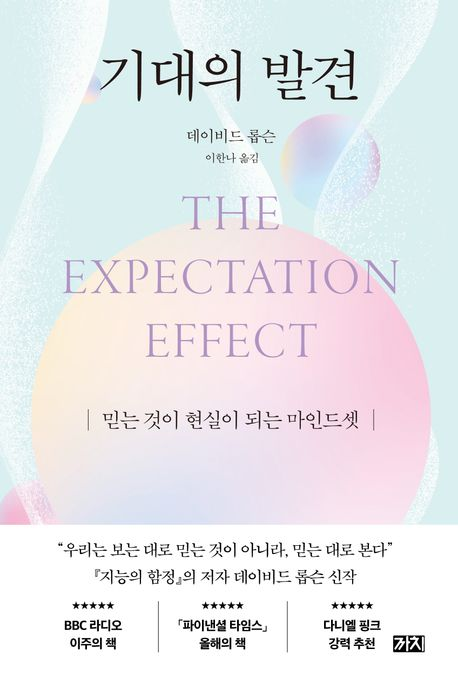
The Expectation Effect: How Beliefs Shape Our Reality
We often hear the advice, “Think positively,” and dismiss it as cliché.
But The Expectation Effect demonstrates that this advice is grounded in science.
Our brain doesn’t simply process information—it predicts, interprets, and even physically alters our bodies based on what we expect.
Why Expectations Change Reality
The book’s central idea is powerful:
We don’t believe what we see—we see what we believe.
Expectations shape:
- physiological responses (heart rate, stress hormones)
- pain levels
- exercise benefits
- immune reactions
- aging processes
- performance under pressure
This isn’t magic—it’s neuroscience and behavioral science combined.
Real Examples from the Book
- Believing that you exercised increases measurable exercise benefits
- Seeing stress as a challenge improves physical resilience
- Expecting recovery strengthens immune responses
- A growth mindset slows cognitive and physical aging
Expectation doesn’t just change how we feel.
It changes what our body does.
Why This Matters Now
In a time when uncertainty and anxiety dominate,
understanding how expectations shape our perception and behavior is essential.
Our expectations form a loop:
Expectation → Behavior → Reality
If the starting point changes, everything changes.
My Thoughts
To me, this isn’t just a psychology book—it’s a guide to reshaping our mental and physical lives.
In my research areas such as public conflict, decision-making, and data-driven governance,
I see how expectations can alter dialogue, cooperation, and outcomes.
Our brain doesn’t passively record reality.
It constructs it based on the signals we send ourselves.
The lesson is clear:
Train your brain to expect better futures—your body and behavior will follow.
기대가 우리의 현실을 바꾼다
우리는 흔히 “긍정적으로 생각해라”는 말을 피상적인 조언쯤으로 여긴다.
하지만 *〈기대의 발견〉*은 이 조언이 생각보다 훨씬 과학적이며, 뇌와 몸의 실제 반응을 바꾸는 강력한 원리임을 보여준다.
뇌는 단순한 정보 처리기가 아니다.
뇌는 “기대(expectation)”를 기반으로 현실을 해석하고, 몸의 반응까지 조절하는 예측 머신이다.
긍정적 기대가 실제 결과를 바꾸는 이유
책에서 소개하는 주요 메시지는 명확하다.
우리는 “보는 대로 믿는” 존재가 아니라,
“믿는 대로 보게 되는” 존재이다.
혈압, 통증, 운동 효과, 스트레스 반응, 노화 속도, 심지어 약의 효능까지—
뇌가 만들어낸 기대가 생리적 반응을 바꾸고, 행동을 바꾸고, 결과를 바꾼다.
예를 들어:
- 운동을 한다고 믿는 것만으로도 운동 효과가 증가
- 스트레스를 “성장 자극”이라 기대하면 실제로 몸의 스트레스 반응이 건강하게 변함
- “나는 회복할 거야”라는 확고한 기대는 면역 반응을 강화
- “나이는 숫자일 뿐”이라는 기대가 노화 속도를 늦춤
이 모든 실험과 사례는 단순한 희망사항이 아니라
신경과학·심리학·생리학이 교차하는 실제 연구들이다.
왜 이 책이 지금 우리에게 필요한가
현대인은 정보를 너무 많이 알고 있음에도,
정작 자신의 뇌가 어떻게 자신을 제한하는지 잘 모른다.
이 책은 말한다:
- 당신을 가로막는 건 환경이 아니라 기대의 프레임이다.
- 기대는 무의식적으로 행동을 조절하고
- 행동은 다시 현실을 만들어낸다.
결국, 기대 → 행동 → 현실의 순환 구조가 삶을 결정한다.
나의 생각
나는 이 책이 단순한 ‘자기계발서’가 아니라,
삶을 바꾸는 실제 기술서라고 느꼈다.
현재 내가 연구하고 있는 공공갈등·정치·데이터 기반 의사결정에서도
사람들의 프레임과 기대는 엄청난 영향을 미친다.
삶에서도 마찬가지다.
결국 우리의 뇌는 현실을 있는 그대로 보지 않는다.
뇌는 패턴을 예측하고, 기대를 기반으로 현실을 조작한다.
그렇다면 우리가 해야 할 일은 명확하다.
뇌가 더 나은 미래를 기대하도록 훈련하는 것.
책에서 다룬 연구들은 이를 뒷받침한다.
“믿음”이 허황된 말이 아니라,
신체 반응까지 조정하는 생물학적 메커니즘이라는 사실을 알게 된다.